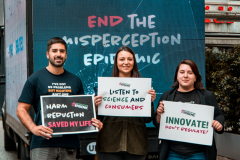
MANILA, Philippines, Dec. 08, 2025 (GLOBE NEWSWIRE) -- A damning analysis from the Coalition of Asia Pacific Tobacco Harm Reduction Advocates (CAPHRA), entitled 'The FCTC Secretariat's Deepening Legitimacy Problem', exposes how the World Health Organization's Framework Convention on Tobacco Control has been captured by American philanthropist-funded NGOs, fundamentally undermining the treaty's credibility and harming global public health outcomes.
The FCTC was originally designed as a government-led mechanism for evidence-based tobacco control. It has now devolved into a private advocacy platform where donor-funded organisations write policy, direct the Secretariat's agenda, and publicly shame countries refusing ideological compliance.
Executive Coordinator Nancy Loucas, co-author of the analysis, condemned the corruption bluntly.
'The FCTC Secretariat allowing these NGOs to write the decisions to be actioned, then hold court and shame countries who refuse to abide by the scripted rules is in direct contradiction to the treaty itself. This has nothing to do with actual health gains and everything to do with control.'
Philanthropic-funded organisations now provide policy framing and narrative direction while the Secretariat enforces their agenda without accountability. Harm reduction experts, consumer groups, and independent researchers are routinely excluded. Smokers and safer nicotine users are dehumanised and excluded from decisions affecting their lives, treated as abstract risks rather than citizens whose health matters.
Co-author Clarisse Virgino, CAPHRA Philippines representative, emphasised the moral failure. 'The most significant failure is the exclusion and dehumanisation of the very people the treaty is meant to protect. Adults who smoke are denied participation in decisions directly affecting their lives and invalidates their lived experiences. When they are reduced to caricatures or portrayed as obstacles to ideological purity, the treaty abandons its public health purpose.'
Countries supporting balanced regulation face vilification despite superior health outcomes. New Zealand's smoking rate of 6.8 per cent – the world's lowest – was achieved through regulated vaping. Yet Bloomberg-funded NGOs awarded the country the 'Dirty Ashtray Award' for refusing ideological purity.
The exclusion of consumer voices creates measurable harm. People who smoke are denied access to safer alternatives. Illicit markets expand. Public confidence in health messaging erodes. Low and middle-income countries suffer most, facing policies misaligned with their circumstances.
The analysis calls for urgent reform. Governments must lead agenda-setting and policy development. Civil society participation must be transparent and inclusive. Independent scientific review must be strengthened, free from single-source funding bias. The Secretariat must disclose external involvement. Clear boundaries between advocacy organisations and treaty functions must be reestablished.
Virgino stressed the authoritarian approach. 'The suggestion that any country supporting harm reduction must be aligned with industry is unacceptable. It shuts down legitimate scientific discussion. Public health decisions should be based on evidence, not ideology. Not all products carry the same risk, and not all countries face the same challenges. Treating every viewpoint that is not prohibition as suspicious makes effective policy impossible.'
Most critically, the treaty's recognition of harm reduction must be applied in practice. Decisions must reflect evidence and real-world effects rather than donor-aligned ideology. With eight million tobacco deaths annually and over one billion smokers worldwide, the FCTC perpetuates avoidable harm.
If member states observe how the WHO is susceptible to private philanthropic capture, they will resist granting further authority in other fields, particularly pandemic preparedness.
Loucas concluded. 'The future of the WHO depends on addressing these structural failures. Without corrective action, both the treaty and the WHO face long-term damage to their legitimacy and ability to protect global public health. The WHO cannot maintain authority if global health governance favours private funding agendas over evidence and member state interests.'
The white paper is available in full here: https://bit.ly/49Nzt3F
Media Contact
N E Loucas, Executive Coordinator
neloucas@caphraorg.net
WhatsApp: +64 027 234 8463
www.caphraorg.net