LONDON/HOUSTON/SINGAPORE, May 21, 2026 (GLOBE NEWSWIRE) -- PRESS RELEASE
Breaking the speed limit: Wood Mackenzie warns AI data centre power race threatens projects and consumers
- Technical and regulatory hurdles make collocation unscalable for most developers
- Load growth and affordability in direct opposition in deregulated markets
INSIGHT FOR IMMEDIATE RELEASE
Wood Mackenzie | www.woodmac.com
LONDON / HOUSTON / SINGAPORE – 21 May 2026 – The race to power artificial intelligence is pushing US data centre development to break the speed limit of grid development - creating significant risk for projects, markets and consumers, according to a new Wood Mackenzie report.
With grid transmission build-outs 5-10 years away and competitive pressure mounting, data centre operators are pursuing collocated generation and flexible interconnection models. Wood Mackenzie’s latest Horizons report “Breaking the speed limit: Can US data centre development outpace grid development?” warns that these projects face far greater technical, regulatory and economic hurdles than the industry understands.
'The power sector is fixated on data centre flexibility, but that is not the end-game for grid operators or data centre operators,' said Ben Hertz-Shargel, Global Head of Grid Transformation and Large Loads, Wood Mackenzie. 'Firm grid service is the goal, backed by new transmission superhighways. But there is a lack of awareness throughout the power sector about the technical and regulatory risk confronting colocation projects, and the business risk of conditional interconnections.'
The challenge is existential for deregulated markets. PJM, the Mid-Atlantic grid operator, has 78 gigawatts of committed data centre load against only 36 gigawatts of accredited generation capacity in its pipeline. In Texas, current market prices of $30-40 per megawatt-hour fall far below the $78-$100 needed to attract new gas generation. Wood Mackenzie’s Accelerated case for data centre load growth entails 16.4 GW of gas capacity additions per year through 2035 to meet projected demand, despite only 4 GW per year from 2023 to 2025.
'Load growth and affordability are in direct opposition in the deregulated markets,' said Chris Seiple, Vice Chairman, Energy Transition and Power and Renewables, Wood Mackenzie. 'If prices rise to the level necessary to incentivise new generation, it will raise prices for all customers, prompting a political outcry.'
To confront this, PJM is bifurcating its generation market - creating one elevated price tier for new resources contracted by large loads, and a lower tier for existing resources. The unintended consequence: existing gas and coal plants receiving lower capacity prices may retire, threatening reliability even as PJM struggles to bring new supply online. Texas, meanwhile, has no comparable plan to incentivise new grid-connected generation, and is trusting that competitive power markets will deliver the new supply. That typically happens by prices rising to levels that attract new investment.
Further regulatory intervention in deregulated markets is likely as affordability pressures mount, with potential knock-on consequences for existing asset valuations. The report warns that developers and investors should be prepared for market rule changes driven not by grid planning, but by political pressure.
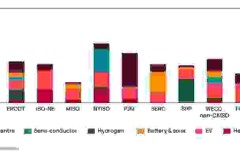
Colocation, or a bring-your-own-generation (BYOG) approach, has been widely touted as a solution to grid constraints. With more than 90 GW of collocated generation now in US interconnection pipelines, it is clear the industry has placed a major bet on this model. However, the report finds that colocation is only achievable for the most sophisticated and well-capitalised hyperscalers, and that for many developers these projects will not materialise, making the model unscalable.
'Even for developers that see collocation as a viable bridging solution to grid power, the costs and technical challenges are formidable,' said Hertz-Shargel. 'Technology providers are only beginning to come to terms with this challenge, the mitigation of which is site-specific, making solutions hard to scale.'
Key technical challenges include:
- The near-instantaneous changes in AI power demand can damage reciprocating engines and gas turbines
- Lithium-ion batteries can be used as a shock-absorber to prevent this, but risk running through their useful lifespan rapidly
- The battery response time must be extremely short, relying on technology that has not been widely commercialised
- The irregular manner in which AI cooling and GPU loads consume power introduces power harmonics, which if unfiltered cause equipment to overheat and degrade
- These loads can also cause sub-synchronous oscillations, posing fundamental stability risk to local generators and to distant ones on the transmission system
The need to protect against downtime, moreover, exposes data centre companies to significant regulatory risk. Grid operators are fast-tracking rules for conditional interconnections to meet data centre companies' demand for speed-to-power, but their ultimate priority is grid reliability - and some recent decisions risk severely undercutting data centre business models.
'PJM's and SPP's rules are understood to give the regional grid priority rights over collocated generation,' said Hertz-Shargel. 'During shortages, data centres would be forced to reduce demand to their firm service level, even as their onsite generation was instructed to supply the grid. For some companies, this model is unworkable.'
ERCOT, meanwhile, has been working with stakeholders to update its voltage and frequency ride-through requirements - rules designed to prevent data centres from reverting to backup power prematurely during minor grid disturbances. The risk is not hypothetical. In 2024, 60 data centres in Virginia dropped off the grid simultaneously following a minor disturbance, nearly causing a grid collapse.
Data centres in late-stage development are unlikely to be able to comply with the proposed changes, however, potentially requiring a site redesign and the purchase of new uninterruptible power supplies and other electrical equipment. With rules still being written and late-stage changes already threatening project viability, regulatory risk remains one of the most significant - and underappreciated - challenges facing the industry.
Underlying all of these challenges is also a fundamental question about cost allocation. Grid operators are planning close to $100 billion in transmission investments in part to support data centre load growth, including PJM ($11.8 billion), MISO ($30 billion+), ERCOT ($33 billion) and SPP ($8.6 billion). Without modification of traditional cost allocation rules, a significant portion of these regional investments could be spread across all existing ratepayers, not assigned specifically to the data centres driving their urgency.
'Grid operators are positioning flexible interconnections as a stopgap, not a long-term solution,' said Seiple. 'The expectation - and often the requirement - is that transmission will eventually provide complete, firm service to large loads. That could cause costs to rise for existing customers if cost allocation methodologies aren’t changed and if the data centre demand doesn’t materialize as forecast.”
Read the entire report here.
ENDS
For further information please contact:
Hla Myat Mon
+65 8533 8860
hla.myatmon@woodmac.com
Mark Thomton
+1 630 881 6885
mark.thomton@woodmac.com
Chris Boba
+44 7408 841129
chris.boba@woodmac.com
Angélica Juárez
+5256 4171 1980
angelica.juarez@woodmac.com
About Wood Mackenzie:
Wood Mackenzie is the global leader in analytics, insights and proprietary data across the entire energy and natural resources landscape. For over 50 years our work has guided the decisions of the world’s most influential energy producers, utilities companies, financial institutions and governments. Now, with the world’s energy system more complex and interconnected than ever before, sector-specific views are no longer enough. That’s why we’ve redefined what’s possible with Intelligence Connected: the fusion of our unparalleled proprietary data with the sharpest analytical minds, all supercharged by Synoptic AI, to deliver a clear, interconnected view of the entire value chain. Our trusted team of 2,700 experts across 30 countries breaks siloes and connects industries, markets and regions across the globe to empower our customers to identify risk sooner, spot opportunity faster and make every decision with complete confidence. For more information, visit www.woodmac.com

Mark Thomton Wood Mackenzie 6308816885 mark.thomton@woodmac.com